

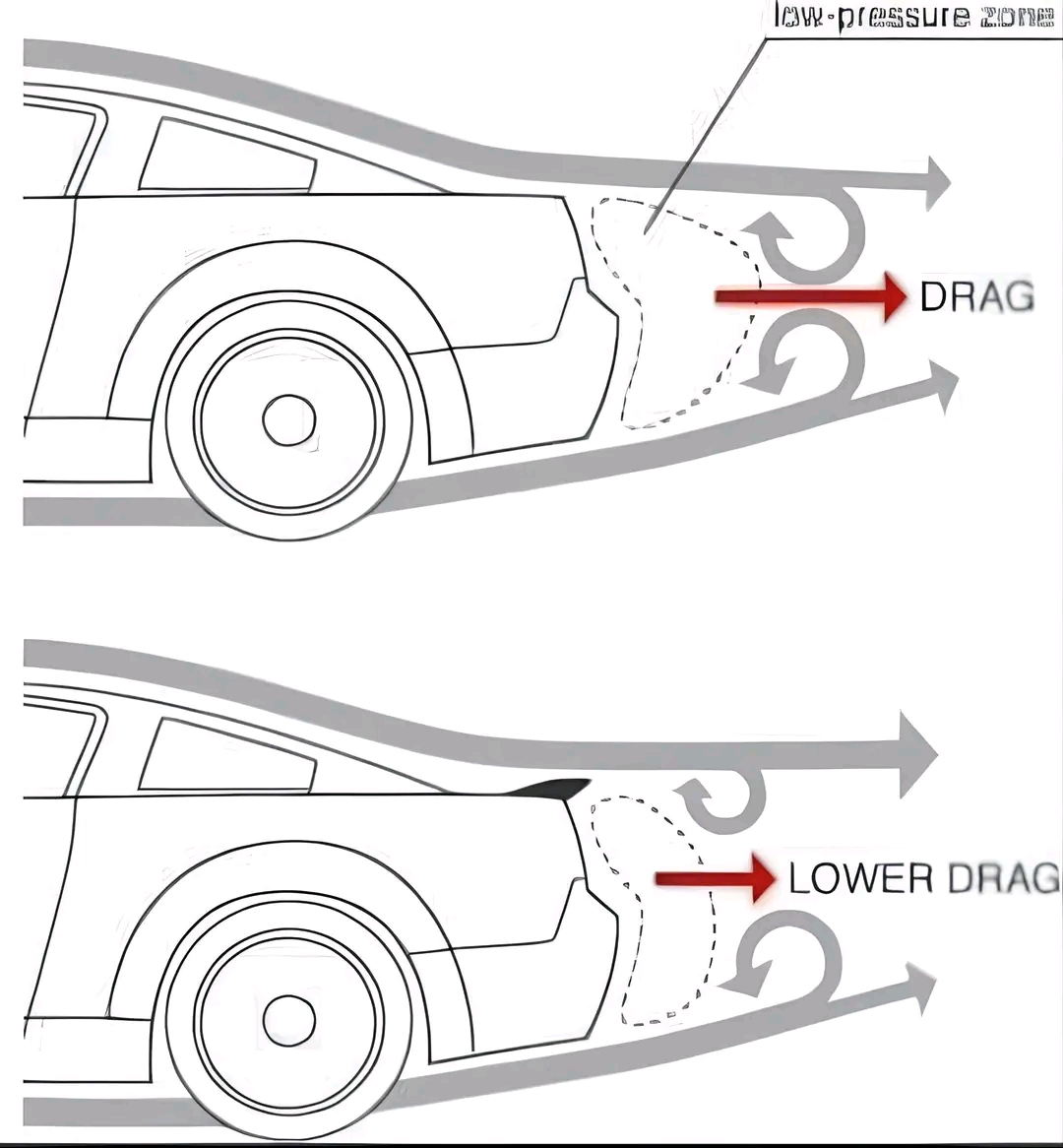
MII – Jakarta – Cars experience drag as they move through the air, acting as a resistance force that hampers their motion. This aerodynamic phenomenon becomes more pronounced at higher speeds due to its quadratic relationship with velocity. Here’s a breakdown of drag and its implications for vehicle dynamics:
- Drag Coefficient (Cd): A unitless measure representing an object’s resistance to air movement. Typically ranging between 0.25 and 0.3 for modern cars, a lower Cd indicates better aerodynamic performance.
- Frontal Area: The total area the vehicle presents when viewed head-on. Combining with the drag coefficient, it determines the overall drag force exerted on the vehicle.
- Drag Area (CdA): Calculated by multiplying the drag coefficient by the frontal area, CdA serves as a comparative metric for aerodynamic efficiency. Lower values indicate reduced power requirements for maintaining speed.
- Aerodynamic Efficiency: Streamlining vehicle design is pivotal for enhancing speed and fuel economy by minimizing drag.
- Lift: While reducing drag, alterations to a vehicle’s aerodynamics can induce lift perpendicular to the airflow. Excessive lift can compromise road grip and safety.
The drag force can be calculated using the drag equation:
F(drag) = 1/2⋅ρ⋅v^2⋅Cd⋅A
Where:
- F(drag) is the drag force,
- ρ represents air density,
- v denotes vehicle velocity,
- Cd signifies the drag coefficient,
- A represents the frontal area.
Car manufacturers utilize wind tunnels and computational fluid dynamics to optimize vehicle designs, aiming to minimize drag and enhance performance. create by Bagus Jati Kusumo